Unlike some of my previous race reports this one is less about the race itself and more about the mental/psychological journey that I went on surrounding this event. I guess that’s one disclaimer. Another one is that this is a long recap.
I didn’t write a report of my experience taking on the Vermont Ultra in mid-September, but if I had the dust jacket would have read something like “After getting pulled for not meeting the time requirements at the final checkpoint of the 2017 Vermont Ultra and with a year to train, Dan arrived at the transition area in 2018’s event more than an hour after the cutoff time, recording a second straight DNF. As the dust settled on the event weekend it was revealed that a combination of inadequate training, obstacle failures, nutrition mistakes, and pacing issues led to a spectacular failure.”
I returned home from Vermont with two weeks to prepare for the Spartan Ultra in Lake Tahoe, which was part of the Spartan World Championship weekend. Understanding that an athlete can’t make any real progress or gains in two weeks but can do a lot of damage via overtraining, my focus was on recovering from the roughly 8700′ of climbing over 15.5 miles in Vermont and thinking through changes I needed to implement for this 30 mile attempt in nutrition, hydration, and gear.
In 2017 I attended the Spartan Tahoe event with a bold plan to run the beast course on Saturday and then the ultra beast on Sunday. The 2017 version of the Tahoe event featured a 17+ mile course and after finishing the Saturday beast in a little over seven hours I knew I had only a slim chance of finishing the ultra beast the following day. I opted to defer that entry and run the beast course again on Sunday. It made sense as I was chasing multiple trifectas in 2017, but it definitely left me with a feeling of unfinished business on this course.
Those two runs gave me a good feel for the course, the terrain, the unique obstacles like the alpine swim, and the elevation which ranged from roughly 6000′ to 8500′ above sea level. I felt I had a reasonably good idea about what to expect for the 2018 course, but after Vermont the impact of multiple DNFs this year really started to weigh on me. I’d come to terms with some of them throughout the year, but even being able to view them as learning opportunities, repeated failure stings.
- April: Spartan New Jersey Ultra DNF – Training mistakes, not being prepared for the impact of downhill running, and lack of trail training miles due to extended winter weather caused me to make it to the transition area about 15 minutes behind the cutoff.
- May: Ice Age Trail 50 mile DNF at mile 40 – This was my first attempt at the 50-mile distance and I made some crucial mistakes with clothing that resulted in me getting overheated and dehydrated.
- June: Titletown Ultra DNF – After running in the 100+ degree heat index for 10 hours, I called it a day in the interest of my health and safety.
- July: Burning River 100 mile DNF at mile 50 – This was farther than I’d ever pushed before and given the option to record an official 50 mile finish or push on and likely DNF the full 100 mile distance, I opted for the medal.
- August: Spartan Hawaii Ultra – my plan to test my readiness for Vermont on a less demanding ultra course was foiled by Hurricane Lane. I cancelled the trip the day I was scheduled to fly out (all of the Spartan events were cancelled).
- September: Vermont – Unlike all the other events this year, I was hit really hard by this failure. I’d been on the course the previous two years and though I knew exactly what I was in for, I just failed to prepare. It’s hard to look in the mirror and admit that you knew what needed to be done and simply weren’t willing to put in the work to be successful.
Leading up to the Tahoe race, a spectator map was released followed by the official course map and some of the inevitable pre-race questions were answered. The beast course appeared to be more in line with the typical distance of 13-14 miles with a roughly 3 mile additional spur for the ultra racers that included a few additional obstacles. In the days leading up to the race more information was provided through a series of videos from the event. The ultra spur would only be completed on lap one (though I must confess that I believed we’d find out the morning of the race that we needed to do it on both laps).


Due both to the altitude of this venue as well as all of the events (athlete panels, speakers, etc.) that were scheduled for the day before the world championship race, my wife and I traveled out on Thursday. After spending a few hours sightseeing and then getting groceries we arrived at our rental condo mid-afternoon. I felt normal all afternoon, but as I was bringing the suitcases up the stairs I noticed my heart rate was elevated and I was breathing a little hard. It wasn’t totally unexpected with the altitude transition, but it definitely gave me pause to think about the challenge that loomed in a few days. I also discovered that I got a minor bloody nose while we were out and about Thursday afternoon and I hoped that wouldn’t be something which would come back to haunt me on course.
Friday was mostly a chill day at the condo with a trip to the venue for a few hours to watch some of the athlete panels and other presentations. At least a little of my hesitation and nervousness was assuaged in the presence of fellow Spartans. For as much griping and negativity as there can be on social media platforms, the energy at the race venues is always positive and infectious. As an admitted fan of the sport it was fun to be in the presence of the top athletes and to speculate on the way things would unfold during the championship event the next morning.
As I was planning for this race I knew that I was not going to run on Saturday in order to maximize my chances for success in the Ultra on Sunday. Rather than just lounging around I decided to spend the day volunteering on course. Even though I’ve completed over 40 Spartan events and had previously volunteered to break down equipment at an event, this was my first time volunteering during an event. I figured it would give me a chance to scope out part of the course, get some more outside time at altitude and provide a front row seat to watch the top elite athletes fly through the course.
Volunteer time
I checked in to volunteer Saturday morning around 6:00 AM and was assigned to the course zone which included all the obstacles on the “soccer field”, a large and relatively flat area of the venue at some of the highest elevations that racers would reach on Sunday at just over 8000′ above sea level. This area included the plate drag, atlas carry, barbed wire crawl, rolling mud, dunk wall and slip wall obstacles as well as a water station. I chose to put myself at the slip wall, which was the final obstacle in that sequence and immediately after the dunk wall. I thought that it would be the most interesting point in that group as it’s the only obstacle in that group which has a potential for failures and I was curious to see how the frigid dunk wall water would affect racers roughly a mile after the swim obstacle.
It was a relatively chilly day with temperatures in the 40s for most of my shift and wind gusts up to and probably over 40 MPH which kicked up incredible walls of dust and dirt for most of the 8+ hours I was on the course.
After helping the volunteers at the water station get set up (Spartan isn’t known for providing tons of instruction to new volunteers so I figured I’d help out as much as I could), I set up at slip wall around 7:30. It was another 30-ish minutes before the lead elite male racers made it to our area and I was stunned at the speed which which they navigated the gauntlet of obstacles in our area, especially the barbed wire crawl. Watching the differences in performance between these top racers and the average “weekend warrior” gave me a whole new appreciation for the level of fitness, skill, and technique these athletes bring to the course. I was also shocked by the difference in performance from the top of the elite field to the tail end of that wave considering that every racer in the elite championship waves had to qualify through various national and regional events. It’s not uncommon for the elite waves at “normal” races to contain “average joes” who simply want to guarantee an early start time, but in this race there was nearly a 30 minute gap between the leaders and the tail end of the wave.
The elite females came through shortly after the tail end of the men’s wave and they were just as impressive. I “might be” a bit of an OCR super-fan and it was really neat to watch all of these ladies flying through the course and getting a chance to shout encouragement their way. Funny story too…just before the lead ladies made it to our area I saw Joe DiStefano, Spartan’s director of sport initiatives, coming over. He asked if I had a phone and when I said that I did he requested that I take pictures of racer headbands and video of burpees in case any top competitors failed the obstacle since there wasn’t an official “burpee cam” located there. I was glad that none of the top female elites or age group racers decided to burpee out of the obstacle too as I never did get information about how to get my videos down to the results tent (over a mile away via a gondola), lol.
Towards the end of the elite men’s wave, continuing through the elite ladies and into the age group wave I started to notice some racers who were having an absolutely terrible time dealing with the cold, especially after coming out of the (really cold) dunk wall. Whether it was due to them traveling from much warmer climates and not compensating for the race conditions with warm clothes or it was just an unexpected reaction to the temperatures, once they got out of the dunk wall some of them simply broke down. As the age group racers started getting to my area and past I began to hear more calls over the walkie talkie to medical requesting assistance for hypothermia cases. At one point mid-morning it got so bad that the volunteer teams at the next obstacle group were rounding racers up and putting them in the aerial tram to get them back down to the festival area and medical staff. It broke my heart to see people who were fully committed to giving 100% in this championship event (and again who had worked hard to qualify for it) have their body completely shut down on them. I’ll probably remember one instance for a long time… a racer who I recognized from the promo video from the 2017 international team race asking me if I could “p-p-p-please h-h-help me tie m-m-m-m-m-my sh-sh-sh-shoe…”. By about 10:30 or 11:00, the medical team had arrived to close the dunk wall for the remainder of the day, just to give the medical team some relief from treating frozen racers and to make sure they could respond to other needs on course.
When my shift ended around 3:00, I took the tram down to the festival. I was windburned, could taste and feel dust and grit in my teeth and was pondering how I was going to attack that course the next day. I stopped to pick up my racer packet on the way out and headed back to the condo.
Saturday evening my wife and I watched the replay of the live stream for the championship race, both to do some last minute race/course recon and also because, again, I’m a huge fan of the sport and I wanted to see how the Spartan season ended up for the top athletes. Knowing that it was going to be an early morning, we ate dinner, finished prep for the transition area bin, and tucked in early for the night.
Race day arrives
The alarm went off on Sunday at 3:30 AM. With the time zone difference this really wasn’t a big deal and I didn’t feel like I was overly tired. Having run several of these events, I’ve got a pretty well defined pre-race routine…
- Get out of bed
- Use bathroom
- Eat oatmeal and yogurt, feed caffeine addiction
- Get dressed
- Take cold items out of fridge/freezer and complete bin assembly
- Put final items into hydration pack
- Head to race
The start of the race was in the upper 30s and I knew from the day before that the wind at the higher elevations would likely provide some additional chill. Determined to learn from the Ice Age fiasco, I put on a long-sleeve thermal wicking top and dry fit t-shirt over it plus the required ultra pinnie, thermal tights with shorts over them, ankle height merino wool socks, and a pair of Altra Timps with gaiters. Like most races I wore a thin pair of work gloves and a wide brim hat.

At 5:00 I headed to the car. My wife wasn’t feeling great so I was on my own for the ~15 minute drive to the venue. As I sat down in the driver’s seat, the cumulative mental impact of all 2018’s DNFs hit me hard. It’s amazing how negative your subconscious can be in moments like this, when you start telling yourself that “if you simply go back up to the condo it won’t be a DNF. Why bother going through all of the pain, the cold, the effort when you KNOW this is just going to be the latest in a string of events you’re not prepared to execute?” True story. It’s the closest I’ve come to abandoning ship on this journey and it took a moment to realize that I needed to approach this just like the rest of the event. Don’t focus on what’s going to happen hours from now, just focus on the task at hand. Drive to the venue. And so I did.
Once I arrived onsite, I just focused on what I needed to do next to stay out of my own head. Park the car. Get your gear on. Get your bin to the transition area. Move around to warm up. Listen for announcements from the race staff. I was hoping to see some people that I knew from various online groups but in the pre-race darkness I never did find them. While I waited for the start time to arrive, I paced around the start area.
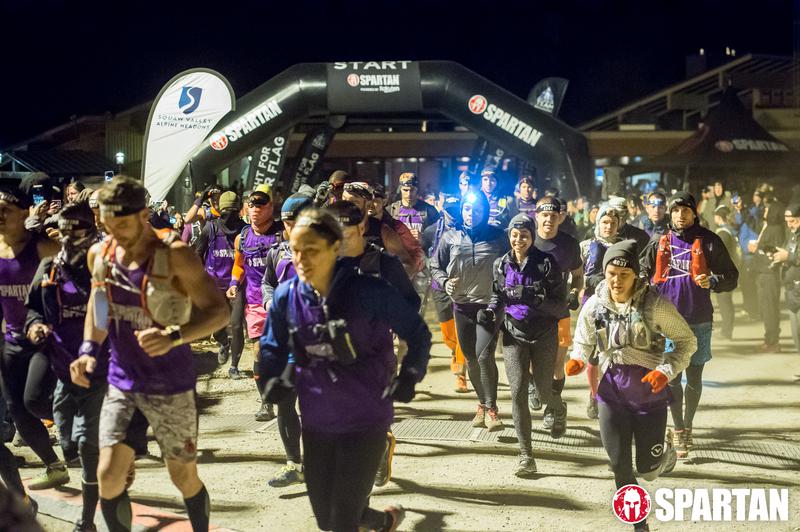
As is fairly typical for these events, the first elite wave started a little late. I don’t get too worked up about it as it’s fairly typical for Spartan ultras and it’s totally out of my control. I try to appreciate the effort needed to ensure that obstacles are properly staffed with volunteers who are on course prior to the 6:00 AM start of the elite ultra participants, plus coordinating that the medical teams are in place and ready. As we were waiting for the start, we got some final pre-race information from the staff, specifically about the water obstacles. They let us know that the medical teams were monitoring water temperature, air temperature, and wind and had a formula to determine if conditions were safe for those areas to remain open. As of the race start, the swim and dunk wall were open but if they were deemed unsafe that decision would be made before the first racers reached it so it would be fair for all racers.
Lap 1
Our age group wave ended up starting about 10 minutes late at 6:25. It was still dark out so I had my headlamp on. The first section of the race ascended out of the Olympic village about 1000′ in the first mile. The trail surface in this first part was mostly fresh wood chips, which offered just enough of an unstable surface to be notable. After a few minutes I arrived at the first obstacle, the hurdle. As I flipped over the first hurdle I felt my dry bag slip out of the outside holding area of my hydration pack and it smacked me in the side of the head. After the second hurdle I had to stop for a moment to figure out a better way to rig it and ended up just clipping it onto the outside of my pack. Securing it with a carabiner ensured I wouldn’t lose it, but it was flopping around and constantly hitting me in the side, not really helping my state of mind.

Roughly 35 minutes after I started, I made it to the Hercules Hoist and was shocked to find that the bags were light enough that I could complete the obstacle without needing to sit down. I’ve been to other races where it feels like you’re trying to lift a VW and while I’ve never failed this obstacle there are times when it’s definitely been tougher.
I spent much of the next mile wondering about how the swim would go. It was still chilly even though the sun had come up. I remembered wading into the water in 2017 and it taking my breath away. I silently chastised myself for not following through on swimming lessons. I then tried to shut all of that out and feel gratitude for my fitness, which allowed me to attempt the event, as well as the financial freedom to travel and run in this incredibly beautiful area of the country.

As I rounded the corner before the swim I noticed first that there were no racers in the water and next the volunteer directing racers past that obstacle. Apparently the medics decided that it was too cold and closed the swim. As much as I like a challenge I couldn’t stifle a cheer inside as I felt all the “what ifs” surrounding being cold and wet being filed away. There was still the possibility of a cold immersion in the dunk wall coming up but that would be seconds, not minutes and it was something we’d just have to deal with later.
After running past the swim, the next obstacle was the bucket carry. This was in the same position as it was in 2017 so I knew I was in for a grind as we went down and then up the sides of the half pipe, a quarter mile in total. As of 2018, Spartan standardized the bucket carry by pre-filling and capping all of the buckets which not only saves time for racers but helps by creating some alternate ways to carry the bucket. The trip down wasn’t too difficult save for some sketchy footing and I was able to make it all the way down without stopping. For the trip back up, I employed a method for breaking down difficult tasks that works well for me. I committed to taking 20 steps. At the end of that interval I felt I could go longer I did another 20 and if not I took a short break (30 seconds ish). By doing this I was able to complete the ascent with two quick breaks and with enough energy to be able to run afterwards. For me part of the riddle of these long events is the constant tension between moving with purpose and getting through the course as quickly as possible but not going so hard that you outrun your body’s ability to keep up, leaving you unable to run later in the race.
After the bucket it was a quick run up to the soccer fields to complete that group of obstacles. As I worked my way through this area I noticed that the dunk wall was closed so I wouldn’t have to contend with being cold and wet at all. Again, no tears.
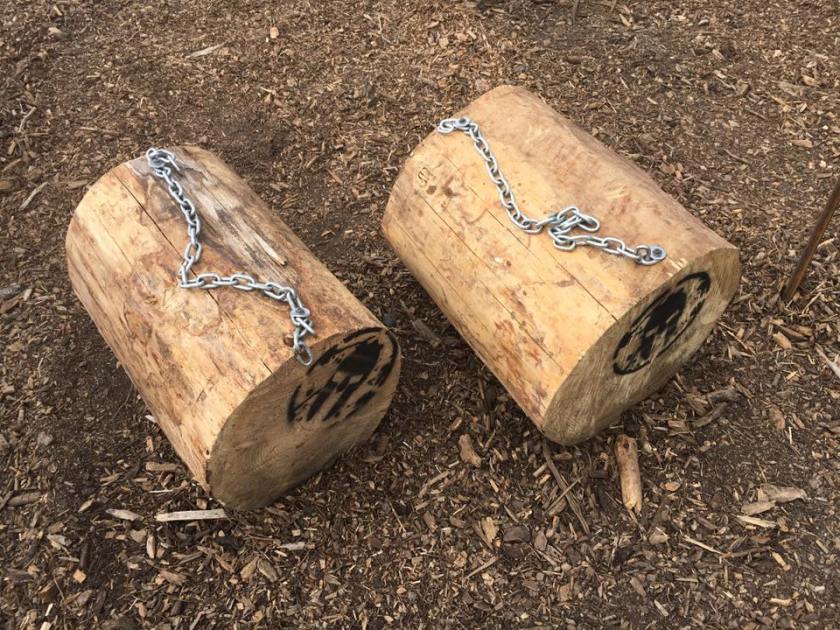
After leaving the soccer fields, we were directed to the ultra spur, which we would need to complete on the first lap, and the ultra-only obstacles. Almost immediately we came to the log carry. Based on previous Spartan logs (well maybe not the West Virginia 2017 log), I thought this would be a throwaway obstacle. LOL, nope. Seriously I don’t know where they found these things, but they were huge. They were heavy too but that was less of an issue than the awkwardness of having them smash into your shins as you carried/dragged them across the wood chop surface from flag to flag and back.
Hello logs… 
This is why you should never assume
After the log we had a nice long section of trail leading up to the roughly half-mile sandbag carry which went close to the top of Emigrant Peak and the highest elevation of the race at roughly 8500′ above sea level. It was still a bit cool and windy, but I felt decent without much impact from the altitude.
The sandbags for the ultra carry were sand-filled polypropylene bags which I think weighed about 25-30 pounds and really weren’t a big deal. I was able to position it just behind my neck in a way that only required one hand to keep it steady. The incline through much of this was gradual and not terribly steep so I was able to keep a decent hiking pace. At the top of the sandbag carry we ran by a small….shrine….which I later found out was Watson’s Monument on the Western States trail. The view from that point was pretty awesome even with the overcast weather. In that moment looking at the monument I couldn’t help but think of the shrine at the top of Everest. Having now climbed to the highest point on the course I touched the monument and thought “well, it’s all downhill from here…sorta”. After jogging most of the downhill I handed off my sandbag to an approaching racer and continued on.

The Watson Monument 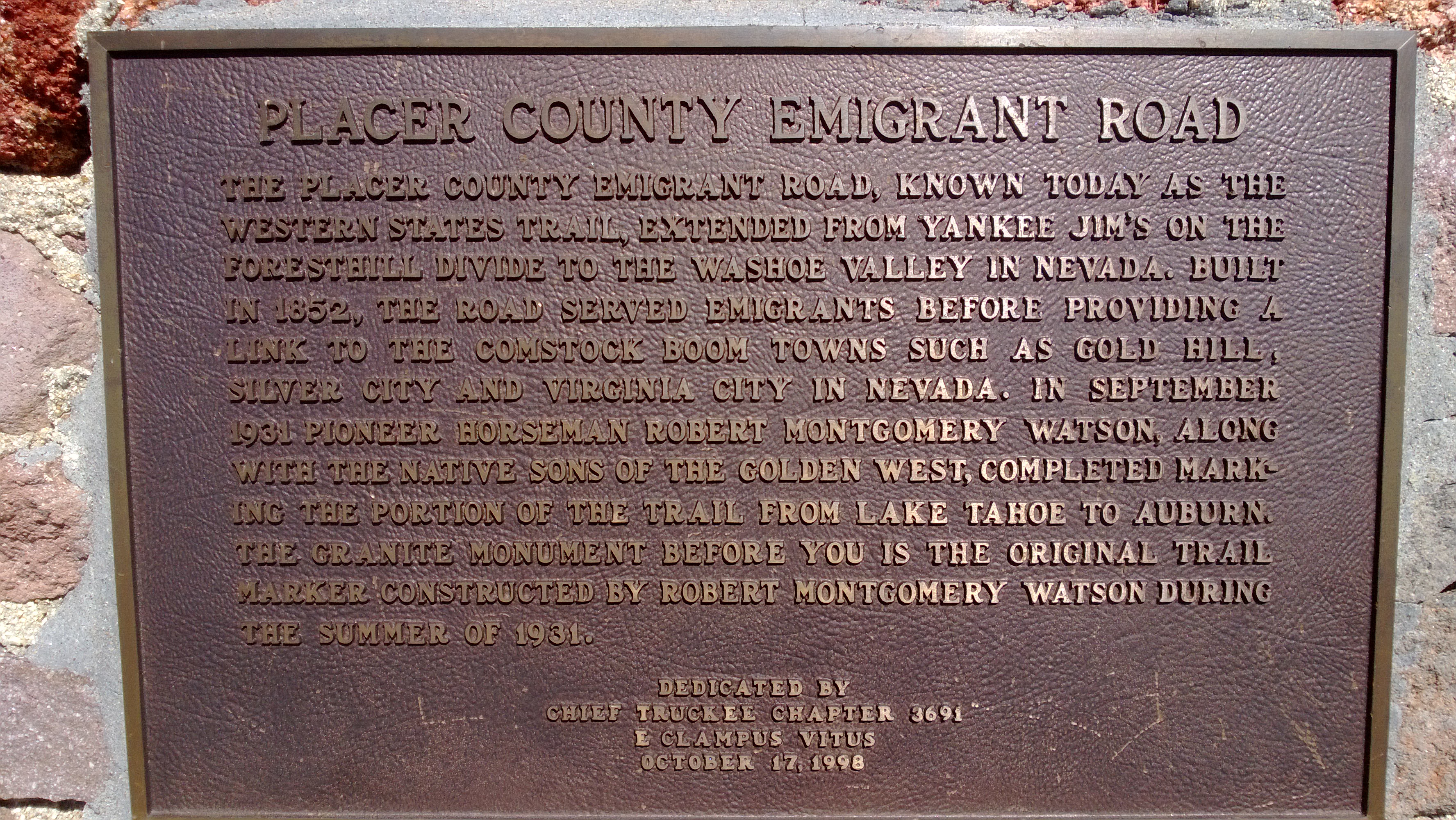
As I was reviewing the map prior to the race, the 10 foot wall was on the list of obstacles I would likely fail. I’m terrible at walls and often have trouble with the standard 8 foot version. As I approached it on the course I was delighted to see that it was a ladder wall that could be scaled and not a traditional solid wall. Bonus. Right after the wall was the timing mat for the ultra loop. At this point I was 2:32:57 into the race with roughly seven miles complete. I’m sure I did some math but refused to believe I was in “good shape” and kept hustling. I’d fallen prey to slacking off in other races when I saw my early pace was “good”, then paid the piper later when it inevitably slowed due to fatigue.

Shortly after the wall we joined back up with the beast course and racers completing the beast. Lots of them gave encouragement to those of us running the ultra. I failed the next two obstacles (spear throw and Twister) and did the required burpees before starting the long descent back towards the festival area. I noticed during the descent that the cloud cover had burned off and it was definitely warming up and I hoped that wouldn’t cause any issues.
It was only a short section of trail before we ended up at the next sandbag carry. I was certainly glad that for the ultra we only had to carry one 60# sandbag up and down the hill (the elites had a double the day before). It still amazes me how much of a difference adding this much weight on your back has on your perceived effort and heart rate, especially when climbing. I pulled over twice on the uphill to catch my breath, I think in part due to the elevation, and hit the timing mat at the top at 3:07:01 and jogged the downhill before dumping the bag off for some other poor soul.

The trail section leading back towards the festival area was fairly technical (lots of loose rocks and uneven terrain) but even so I just couldn’t find a comfortable stride and again worry set in. This was ideally a section of the course where I was going to make up some time to help ensure I would stay ahead of the cut-offs I was dreading and here I was, walking and shuffling down the trail. I did the best I could and eventually arrived at the Olympus obstacle (fail! burpees!). Even on the flat ground in the festival area I felt like I had to walk. I’d been hydrating and following my food plan but my legs felt like lead and I just had no gas. To say this was worrisome would be a real understatement but again, I just tried to focus on the task at hand. Get to the next obstacle or trail marker with the best possible effort, whatever that is. Let everything else figure itself out.
I completed the A-Frame climb and the rope climb successfully before failing the next two obstacles in the festival area (Tyrolean Traverse and Ape Hangar). The race then left the festival area where we completed the tire flip (successful but hard) and a combo obstacle of monkey bars and a Twister section (fail). I crossed the timing mat here at 11:11 AM with a total elapsed time of 4:46:59 over something like 12.4 miles. The first cutoff at 1:45 PM was the time racers needed to be out of the transition area. I knew this was still one big climb and descent away so I tried to hustle as much as I could. I think it really helped to have seen much of this course in 2017 so I knew what I was coming. The final push up the next climb on the course was crazy steep, probably 30-40% and over a bunch of loose scree rock so footing wasn’t always certain. At points I ended up needing to reduce the work to those 20-step intervals again and not look up to the top of the climb.
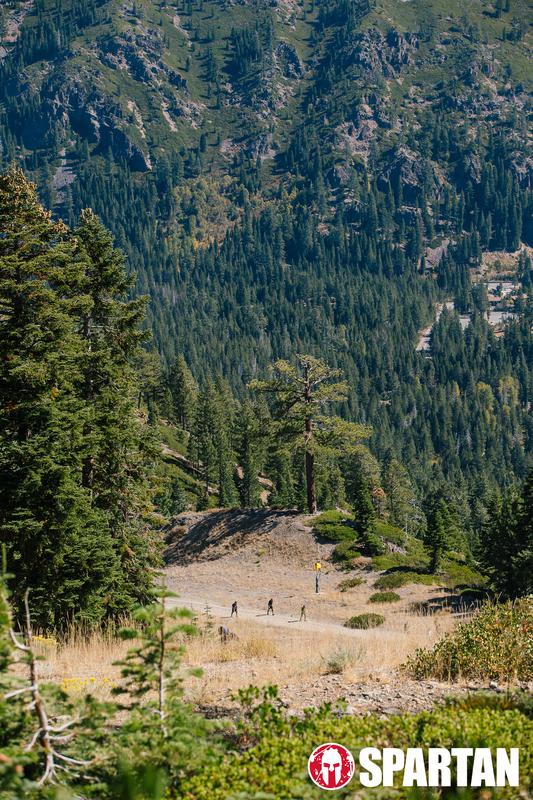

Spartan placed the Stairway to Sparta obstacle at the top of the climb, which gave racers a pretty nice view of the surrounding area. After that it was a few miles of trail and one 8′ wall (fail! burpees!) before we arrived at the transition area. When I emerged from the trail into the final switchbacks I took a peek at my watch and calculated I would hit the transition area about an hour ahead of the cutoff time and for the first time all day I felt real hope. I’d spent most of the first lap trying to block out everything except the trail section or obstacle directly in front of me for fear that I’d enter a negative spiral and even so found more than a few spots where deep down I was doubting that I’d have a successful finish. But now I knew that I was going to have roughly eight hours to complete my second lap which would be about three miles shorter since the ultra spur was lap one only. While it certainly wasn’t a “given”, I knew that if I kept moving and avoided something like an ankle sprain, I wouldn’t have to freak out about the cutoffs.
Just before I entered the transition area a staff member stopped me and said I needed to move my bin from the place I’d set it when I arrived before dawn to the opposite side of the transition area. I guess they were using this as a visual tracker to see how many racers were through transition. Since this was a staff member rather than a volunteer, I took a second to ask if the water obstacles (swim and dunk wall) were re-opened and got confirmation that they weren’t. This allowed me to make some tweaks in transition.

The transition area is where many ultra dreams go to die and experienced racers preach about needing to get in and out as efficiently as possible. Some say that you should avoid sitting down at all. For some racers, the comfort found here is enough to deter them from getting back out on the course to finish what they started. At this point, Spartan could have put a hot tub and steak buffet out in the TA and it wouldn’t have mattered. I knew I was going out to give my best effort to the finish. I allowed myself 15 minutes to sit, eat, re-pack, change, reply to some texts, and get out for the second lap. The healing and motivational power of a PB&J, a Snickers bar and a Red Bull in situations like this cannot be understated. Even though the temperatures had warmed a bit I ditched the second shirt I was wearing but decided against taking time to change clothes other than socks. I’ve learned the importance of caring for your hooves in these long races and was confident that the two minutes I spent applying a fresh layer of Foot Glide and dry socks was time well spent.
Lap 2
I left the transition area 16:11 after I entered. Considering that included the time to find and move my bin I was happy with it. The brief time off my feet coupled with some food felt amazing and I was in really good spirits heading out on the second lap. My pace up the first climb was, as expected, a bit slower than lap one but I never had a sense I was going to cramp or run out of gas. All of the open beast heats had started by the time I started out on the second lap so I only saw a few other racers, mostly other ultra racers, as I started the push to the finish line.
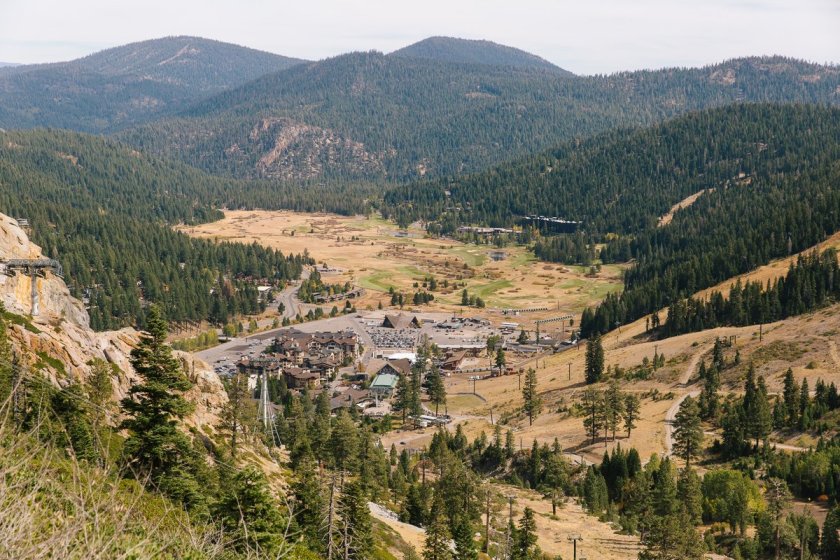
Herc hoist – check. Inverted wall – check. Swim – still closed. Bucket brigade – second verse, same as the first. I was happy that my obstacle performance overall was still decent at this point.
Following the collection of obstacles in the soccer field, the trail section up to the spear was a slight decline and where I struggled to move quickly on the first lap, I now felt relaxed and was able to enjoy the run. After hitting my spear (not so silent cheer), I made it farther on Twister than I ever had before before falling off and did the required burpees with a smile.
After making it through the sandbag, I was able to relax and make way better time on the downhill sections than I had in the first lap. I’d find out later that my split from the sandbag to the next timing mat at the monkey bars was 19 minutes faster on the second lap.

As I came back into the Olympic village area I got a great surprise when I saw my wife waiting for me by Olympus. She was feeling better and had grabbed an Uber to the venue. I hadn’t expected to see her at all during the race and her presence gave me another boost of positive energy. I still failed Olympus (but I had someone to talk to while doing burpees), Tyrolean Traverse (sigh) and Ape Hangar (lol) on the second lap but stayed positive. I did complete the rope climb so at least I avoided those burpees.

I left the monkey bars for the final climb just before 5PM with the sun starting to descend and knew that it was going to get harder to see and colder once the sun went down so I tried to make my best possible time.
After the scree climb and Stairway, it was all downhill to the finish. I knew the finish was mine and enjoyed the feeling as I cruised down the trails, taking time to look around again and appreciate the scenery, not knowing when or if I’d be back to see it again. I used racers on the trail ahead of me as motivation and picked them off one by one. I’m never really racing against anyone but sometimes those little games provide an extra boost when the legs and mind are tired.
Just before emerging onto the final switchbacks, my watch buzzed with a text from my friend Matt back home encouraging me to push for a sub 12-hour finish. I hadn’t really considered that but made an effort to see if it was possible. As I neared the end I began to feel emotion rising, something I hadn’t really dealt with since the Vermont Spartan Beast in 2016. There’s something incredibly powerful and affirming about taking on something you aren’t sure that you can accomplish, pushing through that doubt and the effort that the event requires to emerge victorious. After all of the DNFs and resulting negative emotion, I’d done it. I’d taken on something big, something that scared me, and proved on that day I had enough in me to get it done.
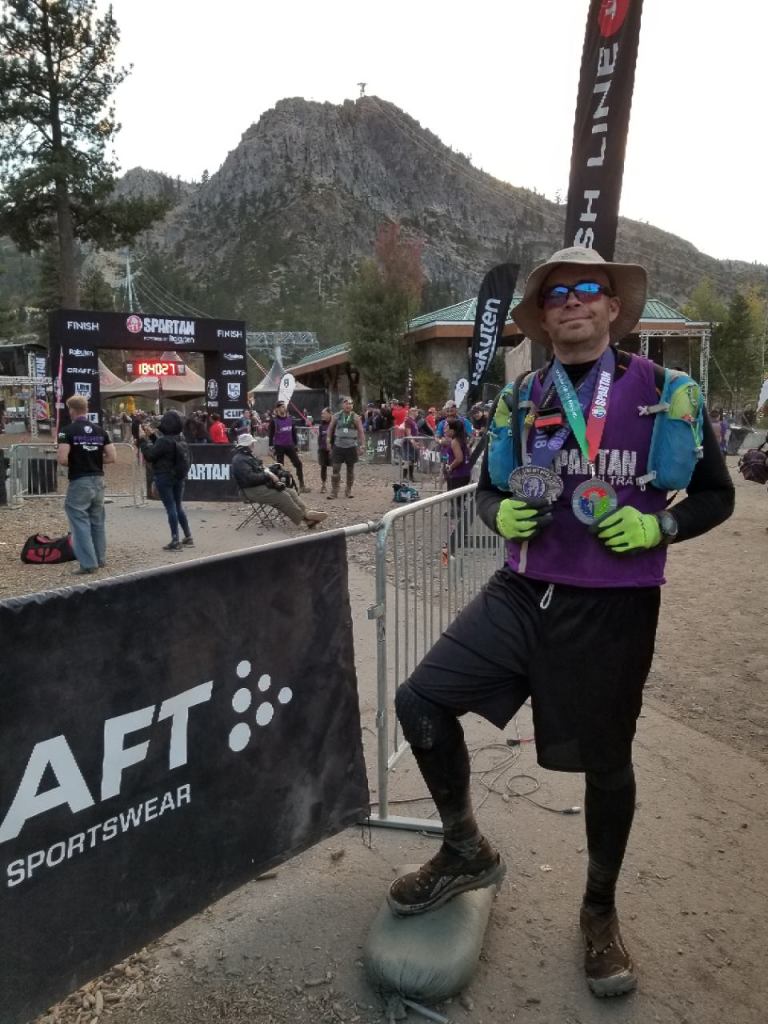
Just before the finish I tried (and failed) the final two obstacles and then crossed the finish line. At that moment the full weight of the day and the release of 2018’s DNF demons hit me full force and I broke down completely.

After taking a few minutes to pull myself back together I headed over to the results tent to grab my precious…. oh sorry, I mean the finisher’s buckle and the medal I’d earned for completing four Spartan trifectas in 2018.

Epilogue
I’m completing this race report almost three months after the event and I can still remember much of it in vivid detail. What strikes me most about this race in hindsight was, as I mentioned at the top, how much this was about the mental battle starting long before the timer was running and the profound effect that successfully completing this event had on me in the days and weeks following. I noticed an almost immediate shift in my attitude and demeanor at work and at home, with significantly better energy and that has re-affirmed my commitment to taking on some big challenges in 2019 (going back to correct some DNFs and a few new things too).

 Average Dan Runs