
When I built my 2018 race calendar starting in December of the previous year, I decided that I wanted to take a shot at completing a 100 mile race. My logic was that the progression of 50 miler (Ice Age) and then 100k (my goal in the Titletown Ultra) would help me figure out gear, pacing, hydration, nutrition and be a natural ramp-up in training to this race (and certainly I’d finish those without issue…). After looking at the Spartan events that I had penciled in, I figured that the ideal time to add the “hundo” to the calendar was late July. This afforded me enough time to train and then to recover before some of the heavy duty OCR events on the schedule from late August through the end of the season.
I decided that my first 100 attempt would be the Burning River Endurance Run. It fit the timeline, was a drivable distance from home, and eliminated the challenges of mountain running and extreme altitude. Honestly I figured that the act of running 100 miles would be tough enough without turning the difficulty knob up to 11 on my first try!
Preparation
I knew going in that this was going to be both physically and mentally tough, but if I didn’t get my race prep done right I would have…
A few weeks out from the event I began prepping and trying to take lessons from the failures and issues of past ultra races. The race staff did a phenomenal job of assembling an informational packet for all participants which described the course, laid out the aid stations and answered pretty much any question a racer could come up with.
One of the biggest lessons I brought forward from last year’s Mosquito Hill run was that you must take care of your feet during an event like this, addressing any issues like blisters or hot spots as soon as possible. Not only does this allow you to move through the race efficiently, but it reduces the likelihood of long and painful foot rehab post-race. I had less than zero desire to repeat the three-week blister healing that I experienced after Mosquito Hill with this race. For this race I made some gear changes, switching away from compression socks to compression sleeves and merino wool ankle socks, and planned to stop roughly every 20 miles to inspect my feet and change into dry socks if needed.
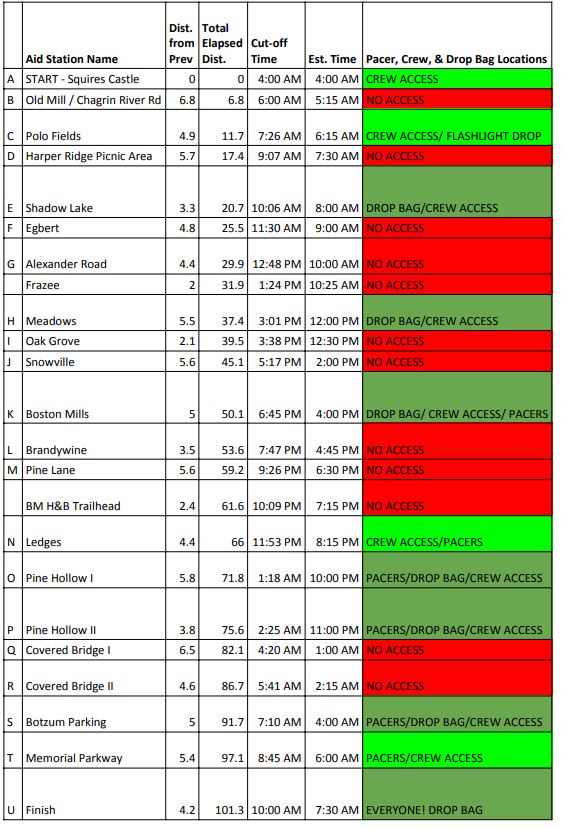
Another critical element in this planning was figuring out the logistics for hydration and nutrition. I’ve found that my body needs roughly 300 calories per hour to perform for the length of an ultra distance race and depending on the temperature and humidity I can easily consume a 2 liter water bladder in less than 90 minutes. Logistically, this race offered aid stations roughly every 5-6 miles so racers were never very far from supplies or help, but I prefer to stick to food that I’ve tested in training to reduce the likelihood of an upset stomach or other GI issues. This meant coordinating resupply locations. The rules for this race stated that a racer’s crew could only assist at designated crew aid stations, not along the course or at specific aid stations that were not large enough to handle the vehicle traffic.
I took this information and created a spreadsheet with mile markers, aid stations (with crew access info), estimated times, aid station addresses/GPS coordinates, and map links, a portion of which is below.
From here, my crew chief/master planner/loving wife added some information she’d need with drive times between aid stations and we planned out when she would check into the Airbnb we had booked for Saturday night.
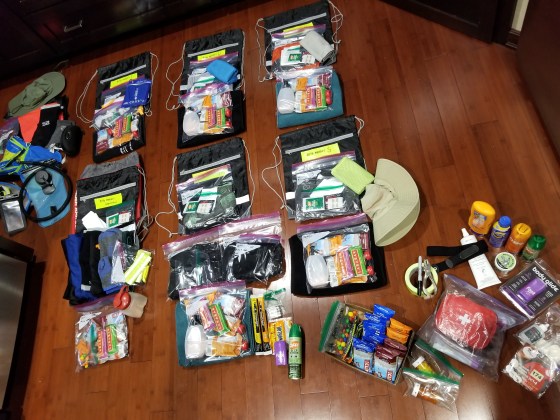
To eliminate the possibility of not having the supplies I’d need, we decided that we would make drop bags for each aid station which offered that option. This allowed us to plan for her to get some sleep Saturday night and ensured that if she couldn’t make it to a planned crew stop I could still continue as planned.
From the Ice Age 50 in May, I knew that mistakes in gear and pacing early in the race can really torpedo your chances for success so I gave a lot of thought to this. As a bigger guy I have to deal with the reality that these events place a lot of load on my hips, knees and ankles. In addition to focusing on good running form, I decided to experiment with a more cushioned shoe than I had been using in my OCR events or other shorter trail runs. Several weeks before the race I purchased a pair of Altra Timps and had a very favorable response to them. I definitely felt that the extra cushion would help my joints out later in the race. As the event got closer the weather forecast proved to be excellent, so I didn’t have to make any other significant changes from what I’d normally wear.
The pre-race packet mentioned several times that the registration fee for the event covered use of the RaceJoy application from a smartphone. The race team noted that the course would be extremely well marked but since this race was a point-to-point course using multiple public parks and roads, the possibility of a missing or vandalized sign could not be eliminated. As a racer, the RaceJoy application would track you and provide status updates to anyone who subscribed to your “feed” and, more importantly, would alert you if you got more than roughly 200 meters off the course.
Friday
The day before the event we left home and drove the roughly eight hours to the finish line area in Cuyahoga Falls. While there was an option to pick up packets and bibs the morning of the race, I always prefer to remove as much of that from race day as possible and simply focus on getting ready for the race.
We arrived in time to get my packet which included the bib, a nice tech style shirt and a few other goodies. We attended the rules meeting at 3:30 and headed for our Friday night lodging closer to the start line.
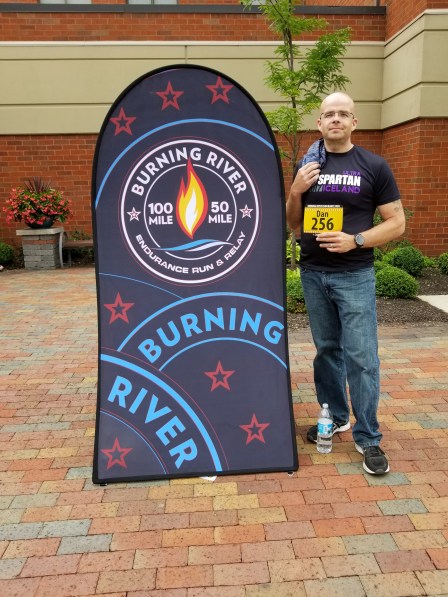
Race day!
With a 4:00 start time for the 100M event, race day started pretty early. The alarm went off at 2:00 and as planned it took about an hour to get up, get dressed, eat, and get the car packed. I’ve always found the experience of driving through major cities around this time interesting (Cleveland in this case). On a major four or five lane highway, there might be a half-dozen cars in view. Definitely less crazy than midday.
We arrived at Squires Castle at around 3:15 AM, ahead of the shuttle bus bringing racers who were staying at or near the Sheraton at the finish line. It was dark and cool and quiet, but that changed pretty quickly once other racers started to arrive. Pro tip: if you arrive just a little bit earlier than the shuttle you can avoid this line for the porta potties!

Leading up to the race day, I wondered if I’d be nervous as the 4:00 start approached. I’ve done a fair number of long races but the first shot at something new always seems to bring heightened excitement. Surprisingly, I really didn’t have a lot of excess nervous energy.
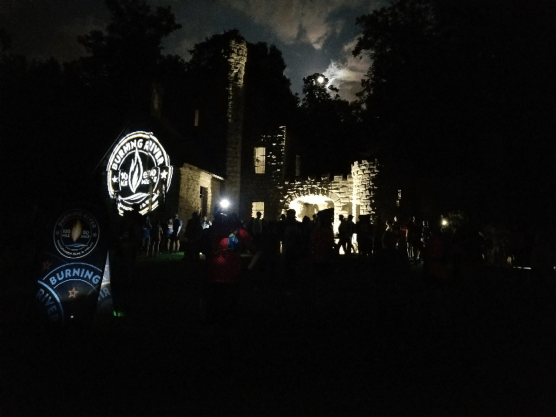
Just before 4:00 we took a few minutes for the National Anthem and with a ten-second countdown, we were off.

Start to Polo Fields (Mile 0-11.7)
Knowing that my overall pace would place me at the middle to the back of the pack, I intentionally let the faster runners pass me and made sure to stick to a relaxed, easy pace as we ventured out onto the streets around the start line. While the humidity was a little high, everything felt good. I decided that I wasn’t going to use headphones until much later in the race, so I just enjoyed the sounds of the morning and some of the conversation going on around me. The terrain was mostly flat with a few short inclines that everyone walked and a few downhills that I ran at a comfortable pace.
I arrived at the first aid station at Old Mill at 5:15 AM, exactly when I had planned. Since it was cool out I hadn’t used much of my water so I decided not to stop and just kept on running.
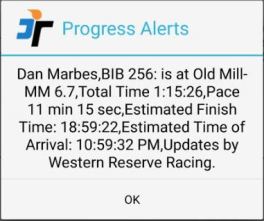
The next five miles of road were pretty flat. Everything still felt good and I arrived at the second aid station at 6:12 AM, three minutes ahead of schedule.


The plan for this aid station was pretty simple: drop off my headlamp, switch from my clear glasses to my tinted glasses, top off my water bladder, grab two more food items, and go. With everything going according to plan, I was in and out of this aid station in about three minutes.
Polo Fields to Shadow Lake (mile 11.7-20.7)
Just after the Polo Fields aid station, the terrain changed from paved road to bridle (horse) trail. While there wasn’t much technical terrain at this point, the trail did require a bit more active attention. In this section there were several water crossings that were no more than ankle deep but for some reason the wet feet sent me into a mental tailspin. One weird thing (to me) about ultra endurance events is the various ups and downs that you experience throughout the event. In this case, I’m not sure why I got into this mental funk but I had to work pretty hard to focus on all the things that were going well. By the time I got to the next aid station at Harper Ridge (only six minutes behind my estimated pace), I’d gotten my head right and was focusing on the task at hand. I stopped just long enough to top off my hydration pack and grab a small cup of Mountain Dew (hi my name is Dan and I’m addicted to caffeinated beverages…)
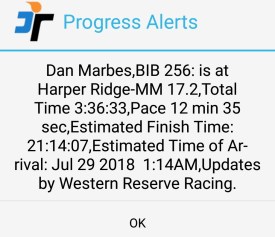
The next three miles to the Shadow Lake aid station were pretty uneventful. I did spend some time chatting with another racer about travelling and frequent flyer miles which was a nice way to pass the time.

Coming into Shadow Lake I avoided being eaten by the T-Rex and made my way over to the crew spot that was waiting for me. Seriously, this race had some FUN aid stations.


The plan for this stop was to take stock of my foot condition and address any issues. Even with the few water crossings my feet were in really good shape. I applied a fresh coat of Foot Glide and put on dry socks. I took an opportunity to change into a dry shirt as well.
It was about time to eat so I took just a few minutes in the chair to put down some food. After 20 miles I was only 18 minutes behind my planned pace which felt great, so I wasn’t worried about a few minutes here and honestly it felt really nice to get off my feet for just a little bit. I knew the next time I’d see my wife would be in a few hours as the next three aid stations didn’t allow crew. I grabbed some food refills for the stretch ahead, made sure my pack was full, and headed out.
Shadow Lake to Meadows (mile 20.7-37.4)
In any event like this, things are going to happen. For me the first one of these “moments” happened between Shadow Lake the next aid station at Egbert. By this point the pack had spread out a lot and I was more or less running on my own. This part of the course had us moving back and forth from some paved bike paths to single track trails and somehow I missed a turn. While running down the bike path I started to notice I wasn’t seeing any course markers or racers (always a bad sign) and after a few minutes I noticed racers that had been just ahead of crossing the path I was on. A number of them yelled out that I’d missed a turn a ways back.
I like to think that moments like this show your character. I stopped and realized that I had a choice to make. I could either turn around and run back up the bike path until I found out where I got off the course or I could wait until no other racers were around and jump back onto the course where I was. Thankfully the decision only took a microsecond and I was jogging back up the path. I figured that the error cost me maybe 10 minutes and a 1/4 mile in each direction. Once I found the turn I missed I also realized why the RaceJoy application never alerted me. Turns out that the actual course ran exactly parallel to where I had gone and I never exceeded the 200 meter threshold required for the warning.

I noticed that as this was happening and in the moments afterwards, I was mentally unfazed. These are the kinds of errors that have the potential to cause one of those crazy emotional lows and I was glad this one didn’t break me down.
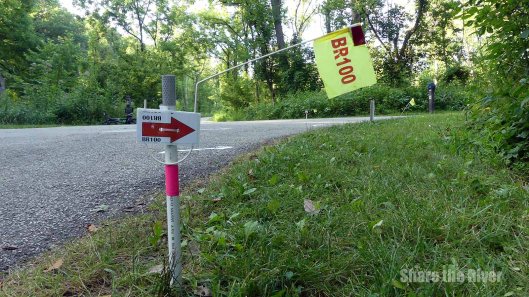
I arrived at the Egbert aid station at 9:42 AM, 42 minutes behind the pace I estimated. I still felt pretty good and wasn’t worried about this since I could account for most of this time with the wrong turn and the extra time I took at Shadow Lake.

This aid station had a super fun Margaritaville theme with music playing and a real party atmosphere.

As fun as this was, I knew that the temptation to linger here would be significant so I simply topped off my hydration pack and rolled out.

The next aid station was just four miles up the road at mile marker 29.9 and it put the biggest smile on my face. After nearly seven hours of racing and dealing with the inevitable soreness and mental fatigue, I turned the corner towards the Alexander Road Aid Station and was greeted by a raucous chorus of cheers and support from the team there, representing Black Girls Run. Their infectiously positive attitudes infused me with a ton of positive energy, and the sponges full of cold water they squeezed over my head and down my back felt amazing!

At this point I decided to take two Tylenol, just to dull some of the soreness and tightness. I knew I wasn’t going to take any Advil or other NSAIDs to avoid putting any more load on my kidneys, but taking the edge off the beating I was putting on my body helped a lot as I moved on.
After two short miles I arrived at the Frazee aid station which was simply a table set up with water and cups. I grabbed one quick glass and rolled on.
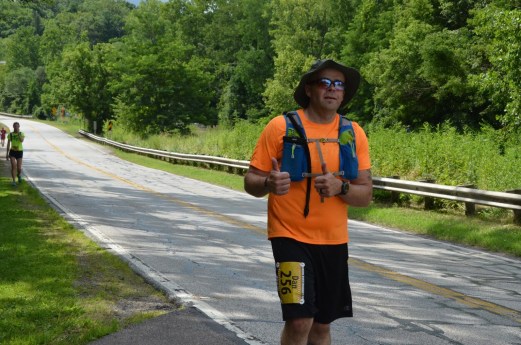
Much of the next 5.5 mile section to the Meadows aid station was a flat crushed limestone bike path. It was nice to allow the mind to focus a little less on the terrain and just run but the trade-off was no tree cover in the warming temperatures of the early afternoon. I was still able to run most of this with occasional walk breaks and felt pretty good about that after 30+ miles. Right around mile 35 as I was coming up to a bridge crossing, I heard a train whistle and as I came around the corner which led to the bridge I saw that there was a passenger train stopped at the station. Unfortunately for me the race path went directly across those tracks. A few of the runners just before simply took a right and ran around the front of the train. Since I had no idea how long the train would be there I followed suit. Let me tell you, when that locomotive horn goes off and you’re on the tracks directly in front of it, you’ll get a surge of energy and adrenaline you weren’t expecting. I was honestly glad I didn’t poop my pants.


Speaking of pooping my pants, one of the very real parts of these events is managing your potty breaks. Most racers can find ways to deal with #1 alongside the trail and some brave souls will simply pop a squat in the woods and use the TP in their packs to handle #2 issues.
Around this time I was starting to feel that a bathroom break was imminent. I made the decision that I was going to push towards the aid station just ahead since I’d already be taking a break for foot care. I didn’t want to add another 5-10 minute stop if I could find a place before then. That stretch of the final two miles coming into the Meadows aid station got progressively more uncomfortable as the call of nature got more insistent, but I was able to push through and reached the aid station at 12:47 PM. This was 47 minutes behind what I had on the pacing plan, but I’d only lost 5 minutes against the plan since Egbert, so I was still feeling pretty good.

I came into the main aid station area, gave my pack to the volunteer to top off , and found my wife set up with our gear. I got confirmation that there were restrooms at this aid station but they were a few minute walk (and not in the direction that I’d be going for the rest of the race). After checking on my feet (they looked awesome!) I applied another coating of Foot Glide, put on fresh socks, changed my shirt, and then had a brief internal debate about whether to “backtrack” the 3 minutes to the restroom. Seriously. As I mentioned above, the mental game in these long events is a funny thing. I’d spent the better part of the last 30 minutes dealing with all sorts of unpleasant sensations and yet I was worried about losing time. After mulling it over, I decided that the smart decision was to walk however far it was to the toilet and then feel better leaving this aid station.
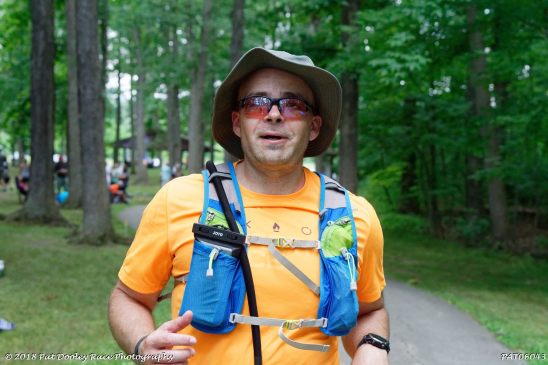
After grabbing some food and caffeine, I headed out for the final stretch of the first 50 miles. The next place that crew were allowed was at the 50 mile marker.
Meadows to Boston Mills (mile 37.4-50.1)
The section right after the Meadows aid station was a relatively quick two miles to the Oak Grove aid station on bridle trails. We’d been told at the start of the race that there was the possibility of seeing horses on the trail since these were open, public areas. If we came across horses, we were to stop and let them pass for our safety. Apparently horses don’t much care for things which smell like death. Can’t blame them I guess. This stretch was the first place I saw any horse riders on the course and I needed to briefly stop to let them pass.
The Oak Grove aid station was busier than I expected for a no-crew station but this was due to it being an exchange point for the 8-person relay teams. About an hour had elapsed since I rolled into the previous aid station but I had only been running for about 20-25 minutes. Much of that additional time was the potty break and foot care. Since I had just filled up, I ran by the Oak Grove aid station and began the 5.6 mile journey to the Snowville aid station.
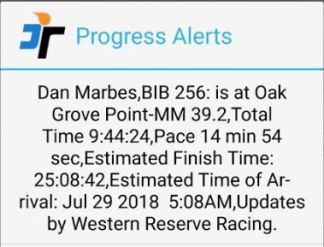
I found the course up to this point to be really manageable and was still feeling good about everything. The section from Oak Grove to Boston Mills did its best to make up for that with single track trails, long climbs and other craziness.
I knew that with 50+ miles ahead the key was to manage my heart rate but still move with a purpose. Things went well for about the first hour after Oak Grove. I was managing pace well and feeling pretty good. Then at some point around 2:45 or 3:00 I ran out of water. I’d underestimated how much I’d consumed between Meadows and Oak Grove and made a mistake in not stopping there to top off. I was forced to back off the pace a little while navigating the steep climbs and technical terrain. I kept moving forward, wishing the relay racers who were passing me good luck, and focusing on forward progress, knowing that I’d eventually reach Snowville.
It felt like forever until the Snowville aid station appeared on the horizon and I’ve never been more grateful to see a food tent. The volunteers filled up my pack with ice water and while I was waiting I grabbed a can of ice-cold Mountain Dew and a PBJ sandwich. I don’t think I’ve ever eaten something so delicious! I spent a few minutes there and put down a second can of Dew to get some fast acting sugars into my system to try making up for being behind schedule with calorie intake.
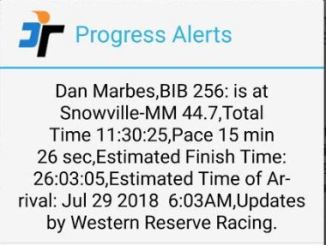
Somewhat surprisingly I’d only dropped 15 minutes off my planned pace and was now 90 minutes off that plan even with the water drama. During the race I wasn’t paying much attention to this comparison, as I knew my estimates were a wild guess at best.
The five-mile push to the Boston Mills station was more single track, though the inclines seemed a little less intense than the previous section. Whether that’s because I found new life in a can of Mountain Dew or because it was actually a little less technical I don’t really remember. I did notice for the first time, however, at around mile 48 that my legs were feeling tired and that even on the flats it was hard to maintain a decent pace.
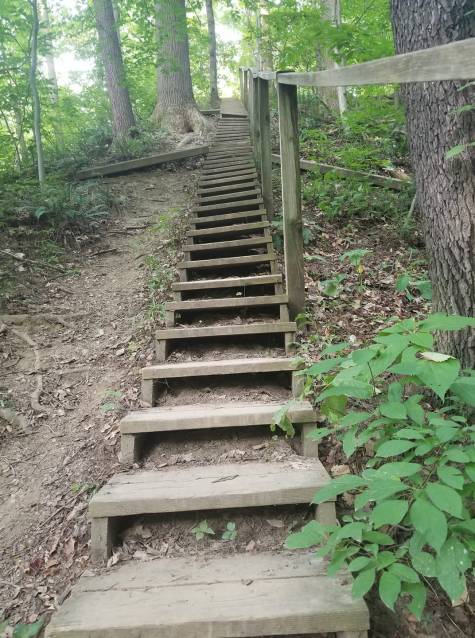
There were some sections of the course that offered a different challenge, like these stairs at around mile 49.
At 5:14 PM I pulled into the Boston Mills aid station. There was a lot of buzz at the aid station as the runners were getting ready for the start of the “back 50” mile race at 6:00 PM.
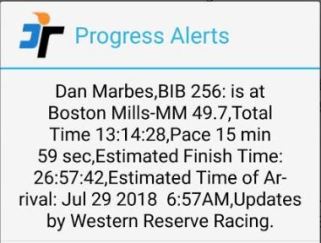
My wife was ready with the chair and supplies per our plan. As I sat down to give my feet a few minutes rest, I asked my wife to give me a sanity check on what I’d been thinking for the last two miles. With my pace slowing and word from other runners that the course over the back 50 miles was more technical and challenging than the front 50, I had concerns about making it to the finish line in the remaining time. After the DNF at the Spartan NJ Ultra, the DNF at the IAT50, and tapping out early at the Titletown Ultra in June, I didn’t want to add yet another DNF to this year’s resume. Conversely, I wanted to make absolutely sure that I wasn’t just letting the physical and mental demand of this event win and electing to take what some might consider the easy exit.
The Burning River 100 is one of very few races that I’ve seen which offers 100 mile racers the option to drop at the half-way point and record an official 50 mile finish. Had this option not been available and it was “all or nothing” I’d likely have pressed on, but after several minutes of conversation and weighing options I decided that on this day 50 miles was enough and I would celebrate the success of completing my first 50 mile distance knowing that my gear, hydration, nutrition and foot care plans had been more successful than any event this year and that I’d come back next year better trained to conquer the full 100 mile distance. I verified that I had completed this portion of the course within the allowed time and told the race directors what I had decided. To their credit they made sure that this was really what I wanted to do before accepting my bib and moving me to the 50 mile race.


Epilogue
A month removed from the event (when I’m finally writing this), I still think it was the right decision to call it a day at 50 miles and celebrate all that went well. I’m confident I could have made it somewhere into the high 80 or low 90 mile portion of this race, but I’m pretty sure that a DNF at the 30-hour mark would have hit me hard. Even though I felt pretty good right after some of the earlier DNFs this season I found that in the weeks that followed I was subconsciously beating myself up over them and I was just somewhat “down” from early May until this race.
Ultimately, this year’s schedule was all about experimenting with different distances and course types to understand if ultra running was something I really wanted to pursue. So in the end, what did I learn?
- Trying to run these distances from fifty to one hundred miles in a single event is hard and there’s no way around that.
- The ultrarunning community, very much like the OCR community, is filled with wonderful people who set up and staff these events in addition to those who race them. In this sport, it’s really you against the course and not you against the other runners.
- These events pose many challenges (physical, mental, and logistical) and all of them need to be solved to have a successful day.
- Even on days when your best isn’t good enough, there’s something incredibly rewarding about knowing you pushed as hard as you could.
- When you fail, you need to study those events to determine what went wrong and understand how you’re going to adapt your training and/or race plan to avoid those issues in the next event.
- While I’ve learned a ton this year which will help me in selecting and completing races in 2019, I have plenty of opportunity to grow and develop within this sport.
With all of the trail ultras behind me for 2018, I turn my focus back to a handful of 30 mile Spartan Race events before entering the off-season in late November. I’m definitely looking forward to returning to Burning River in 2019 in better condition and completing the full 100 miles.


 Average Dan Runs